
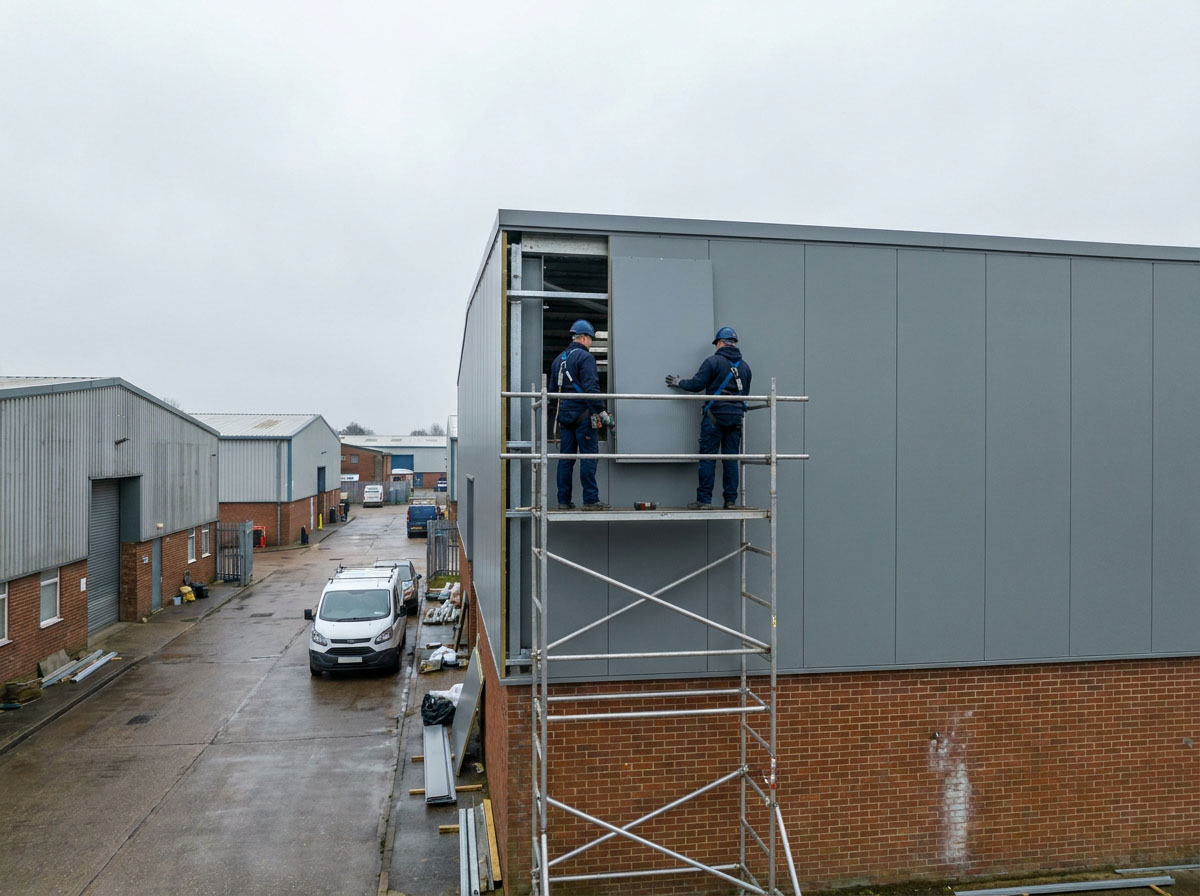
What Are the Most Durable Cladding Materials for Industrial Buildings?
Choosing the right cladding for a warehouse, factory or industrial unit is about much more than appearance. Industrial cladding needs to withstand the weather, protect the building structure and continue performing over many years. Therefore, choosing experienced industrial cladding contractors in Kent is important when deciding which material and system is right for your building.
Metal cladding is one of the most common choices for industrial buildings. However, different materials and systems offer different advantages. The right option will depend on the building, its location, insulation requirements, budget and whether the project involves a new installation or refurbishment.
Below, we answer some of the most common questions businesses ask when comparing industrial cladding materials.
What Is Industrial Cladding?
Industrial cladding is the external covering fitted to the walls, and sometimes other parts, of an industrial or commercial building. It creates a protective outer layer around the structure.
Cladding is commonly used on warehouses, factories, workshops, manufacturing premises, distribution centres and industrial units.
In addition to protecting the building from the weather, the right cladding system can improve appearance, thermal performance and the overall condition of an older property.
What Are the Most Durable Cladding Materials for Industrial Buildings?
There is no single material that is best for every industrial building. However, metal cladding systems are widely used because they combine durability with relatively low maintenance requirements.
Common options include:
- Profiled steel cladding for factories, warehouses and industrial units.
- Insulated metal panels where thermal performance is also important.
- Aluminium cladding for lightweight and corrosion-resistant applications.
- Zinc cladding where a distinctive appearance and long-term weather resistance are required.
- Timber cladding where the design calls for a more natural external finish.
The most appropriate choice depends on the design and use of the building. As a result, a professional assessment should consider more than appearance alone.
Why Is Metal Cladding Popular on Industrial Buildings?
Metal cladding is particularly well suited to industrial premises because it can cover large areas efficiently. It can also provide a strong, weather-resistant external finish.
Profiled metal sheets are commonly seen on warehouses, factories and commercial units. They can be installed vertically or horizontally depending on the design of the building.
Another advantage is that metal cladding can work alongside a metal roofing system, creating a coordinated external building envelope.
NextGen Cladding provides specialist metal cladding services for industrial and commercial properties throughout Kent and the South East.
Is Steel Cladding Durable?
Steel cladding can provide a durable solution for industrial buildings when the correct system is specified and installed properly.
Modern profiled steel sheets are generally supplied with protective finishes designed to withstand external exposure. However, performance will still depend on factors such as the environment, maintenance and whether damage is repaired promptly.
Areas around fixings, joints, doors, windows and corners should also be properly detailed to prevent water ingress.
Is Aluminium Cladding Suitable for Industrial Buildings?
Aluminium can be a good choice where a lightweight and corrosion-resistant material is required. It is also used for architectural details and finishing systems on commercial and industrial buildings.
The correct specification depends on the location of the property and the part of the building being clad.
NextGen also installs aluminium coping systems, which can help protect parapets and wall edges as part of the wider building envelope.
What About Zinc Cladding?
Zinc is another metal cladding option. It is often chosen where both durability and architectural appearance are important.
Over time, zinc naturally develops a protective surface patina. This changes the appearance of the metal while helping protect the underlying material.
Zinc can therefore work particularly well on commercial buildings where the external finish forms an important part of the design.
Can Timber Cladding Be Used on Industrial and Commercial Buildings?
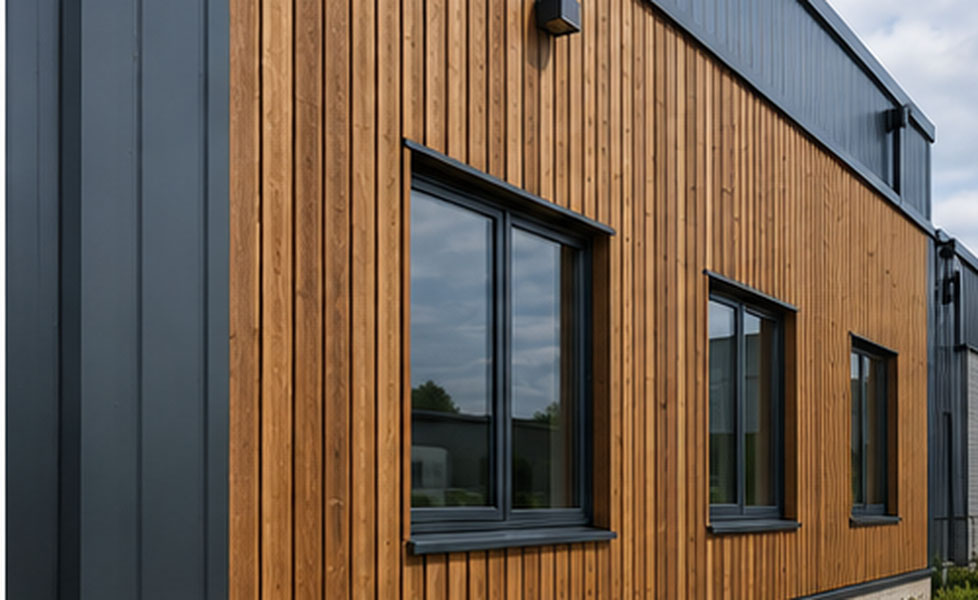
Yes. Although metal is very common on industrial properties, timber can also be used on commercial and industrial buildings where a warmer or more natural appearance is required.
Timber cladding can work particularly well on offices, entrances, reception areas or sections of a larger commercial building where appearance is especially important.
However, timber has different maintenance requirements from metal. The species, treatment, exposure and detailing will all influence how it performs over time.
NextGen provides timber cladding alongside its metal roofing and cladding services.
Are Insulated Cladding Panels Better for Industrial Buildings?
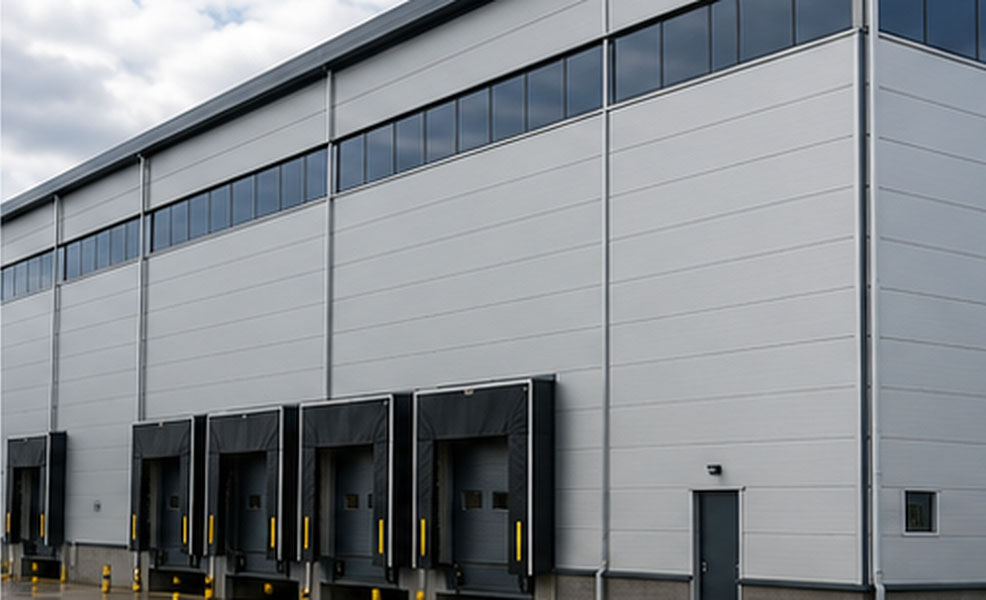
Insulated cladding panels can be a useful option where the external wall also needs to contribute to the thermal performance of the building.
These panels combine an external metal surface with an insulating core. Therefore, installation can provide both weather protection and insulation within the same system.
This can be particularly relevant when refurbishing an older industrial building or creating a new warehouse or commercial unit where energy performance needs to be considered.
The correct panel specification should always be based on the requirements of the individual building.
How Long Does Industrial Cladding Last?
There is no single lifespan for industrial cladding. Performance depends on the material, coating, installation quality, exposure, maintenance and surrounding environment.
A well-installed metal cladding system can provide many years of service. Nevertheless, regular inspections are useful because small defects can develop around joints, fixings or areas that have been damaged.
Repairing these problems early can help prevent moisture from reaching the structure behind the cladding.
What Causes Industrial Cladding to Deteriorate?
Several factors can affect the condition of industrial cladding over time.
Common problems include:
- Corrosion or deterioration of metal surfaces.
- Damaged or loose fixings.
- Dents caused by vehicles, machinery or impacts.
- Failed sealants around joints and openings.
- Water entering around flashings or poorly detailed edges.
- Ageing coatings or faded finishes.
- Damage caused by severe weather.
Problems do not always mean that all of the cladding needs replacing. In some cases, individual sheets or damaged sections can be repaired or replaced.
Should Old Industrial Cladding Be Repaired or Replaced?
The answer depends on its overall condition.
If damage is limited to a relatively small area, replacing individual panels or repairing particular details may provide a practical solution.
However, where deterioration is widespread, a larger refurbishment may provide better value. Refurbishment can also give a business the opportunity to improve the appearance or thermal performance of an older building.
An experienced industrial cladding contractor should inspect the existing system before recommending full replacement.
Can New Cladding Improve the Appearance of an Older Industrial Building?
Yes. Re-cladding can dramatically change the appearance of a warehouse, factory or commercial unit without changing the underlying structure of the building.
Businesses may choose new cladding when refurbishing premises, updating corporate branding or improving the appearance of an older industrial estate.
Different profiles, finishes and colours can also be used to create entrances, feature areas or contrasts between sections of the building.
Can Industrial Cladding Improve Energy Efficiency?
Cladding can form part of a wider strategy to improve the thermal performance of an industrial building. However, the result depends on the complete wall construction rather than the external sheet alone.
Where insulation is incorporated into the cladding system, it may help reduce unwanted heat loss through the external walls.
For this reason, businesses planning a major refurbishment should consider the cladding, insulation and roofing together rather than treating each element separately.
What Should You Look for When Choosing Industrial Cladding Contractors in Kent?
Industrial cladding projects can involve large wall areas, specialist access equipment and work around active commercial premises. Therefore, contractor experience matters.
Before appointing a company, consider asking:
- Do they regularly work on warehouses, factories and industrial buildings?
- Do they install both metal and other commercial cladding systems?
- Can they assess the condition of existing cladding before recommending replacement?
- Do they understand how roofing, gutters, flashings and wall cladding connect?
- Can they work around normal business operations?
- How will access and working at height be managed?
- Can they explain the advantages of different cladding materials?
- Do they provide both new installations and refurbishment work?
The contractor should recommend a system based on the needs of the building rather than simply using the same solution for every project.
Why Choose Industrial Cladding Contractors Based in Kent?
Choosing a local specialist can make site visits, inspections and project planning easier.
NextGen Cladding is based in Maidstone and works on industrial and commercial buildings throughout Kent and the wider South East. This includes metal roofing, metal cladding, timber cladding and associated external building work.
For businesses in Kent, working with a contractor familiar with industrial and commercial projects can also make it easier to arrange an initial site assessment before deciding on the most appropriate solution.
Frequently Asked Questions About Industrial Cladding
What is the best cladding for a warehouse?
Profiled metal cladding and insulated metal panels are commonly used on warehouses. However, the best choice depends on the building, insulation requirements, appearance and budget.
What is the best cladding for a factory?
Metal cladding is widely used on factories because it can provide a durable external finish over large wall areas. The precise system should be chosen according to the building and how it is used.
Is metal cladding waterproof?
A properly designed and installed cladding system is intended to protect the building from weather. However, joints, fixings, flashings and openings must all be correctly detailed for the system to perform effectively.
Can damaged metal cladding panels be replaced?
Yes. Where damage is localised, individual sheets or panels may sometimes be replaced without renewing the entire elevation.
Can you install new cladding over an existing industrial building?
In some situations, refurbishment or over-cladding may be possible. The existing structure and cladding need to be assessed first to determine the most suitable approach.
Do industrial cladding contractors also install roofing?
Some do. Using a contractor experienced in both industrial roofing and cladding can be useful because the roof and wall systems meet at gutters, edges, flashings and other important details.
Can cladding be used on commercial buildings as well as factories?
Yes. Cladding is widely used on offices, retail units, warehouses, workshops, distribution centres and many other commercial and industrial buildings.
Does industrial cladding require maintenance?
Yes. Periodic inspections can identify damaged sheets, loose fixings, failed sealants, corrosion or other problems before they become more serious.
Looking for Industrial Cladding Contractors in Kent?
The most durable cladding system is the one that is properly specified for the building, correctly installed and maintained over time. Metal cladding remains an excellent choice for many warehouses, factories and industrial units, while aluminium, zinc, insulated panels and timber can all have important roles depending on the project.
NextGen Cladding provides specialist industrial and commercial cladding services from its base in Maidstone, covering Kent and the wider South East.
If you are considering new cladding, refurbishment or repairs to an existing industrial building, contact NextGen Cladding to discuss your requirements.